India runs some of the world’s largest nutrition programmes, reaching over 100 million women and children through initiatives led by its Ministry of Women and Child Development (MWCD). While considerable progress has been made, there remains a suboptimal use of data in decision-making to more effectively combat nutritional deficiencies. From local to national government, ensuring data access is critical for monitoring, evaluation and informing strategies. Actionable insights from relevant datasets can be used to strengthen programme delivery, leading to improved efficiency and more targeted outcomes that benefit mothers, pregnant women and children.
The Approach
A pilot was conducted in Rajasthan with a focus on enhancing data use by leveraging digital data not just for reporting purposes, but as a valuable institutional tool to strengthen decision-making. The pilot included building role-based analytical dashboards using dummy data, capacity-building around data analytics, and expanding the functionality of existing tools to generate actionable insights for policymakers at different levels of decision making (district, state and local). This approach sought to better understand the needs of decision makers and the population to co-create tools that increase relevance, usability, and ownership, and translate into overall nutrition improvement with key performance indicators (KPIs) that are results-based.
The Benefits
Accessible, insightful data made available through an understandable, actionable dashboard, enabling decision makers in government to plan and monitor nutrition services. The approach centralizes data and decentralizes decision-making by enabling relevant information to be visible to different roles within government. While much of the data already existed, it can now be tracked and accessed depending on the roles of decision makers. The new dashboard will enhance KPIs and shift the focus from monitoring to active decision-making. The dashboard caters to individual decision makers, with an emphasis on trends, growth, and measuring efficiency. The outcomes will benefit society through more direct investments in maternal health, nutrition and early childhood development, as well as the general population by contributing to a healthier and food-secure society.
The use case is focused on SDG 2—Zero hunger, through its focus on ensuring access to high quality nutrition; SDG 3—Good health and well-being, through nutrition’s connection to health outcomes; and SDG 5—Gender equality, by centering the attention around women and girls, and children.
India has reduced the proportion of stunted children under the age of five from 50 percent in 2000 to 32 percent in 2022 (WHO)
Nutrition is linked to several human development indicators including health, education, productivity and poverty, to name a few. Nutrition, which is intrinsically linked to economic and social development as well as the medical welfare of people, continues to be a cornerstone of India’s key development priorities. Nutrition is particularly important in the first five years of a child’s development; problems that develop in early childhood can be drastically reduced and avoided through good nutrition. Malnutrition is deeply concerning in India as it poses a challenge to the health and well-being of over one-third of children. Nutrition programming for mothers, pregnant women, and children typically sees the highest return on investment. To improve nutrition programming, the Indian Government must ensure decision makers have the right tools to make data actionable and relevant to their specific roles.
Data can play a vital role in tracking and monitoring the nutritional health of the population, guiding efficient resource allocation and ensuring all segments of the population can access nutrition programming. Nutrition data can also generate insights for policymakers to promote nutrition based on the needs of different populations and regions.
The Department of Women and Child Development in Rajasthan enlisted GIZ, the German development agency, Data2Policy and SENU (Securing Nutrition Enhancing Resilience), and global health non-profit organization Jhpiego, to pilot a new approach that uses data as a tool for systemic decision-making and institutional strengthening. The pilot focused on developing role-based analytical dashboards and tools that tailor critical nutrition indicators to the specific needs of government users. These build on existing data and programmes from the Indian Government—which have already increased the availability of data—by creating customized dashboards and information for different roles and levels of government.
Engaging stakeholders to understand nutritional data needs: To co-design the pilot, GIZ, the Department of Women and Child Development in Rajasthan, and Jhpiego required a comprehensive needs assessment involving all stakeholders, to ensure that the new system aligned with decision makers' needs. To complete this, a two-part methodology was used.
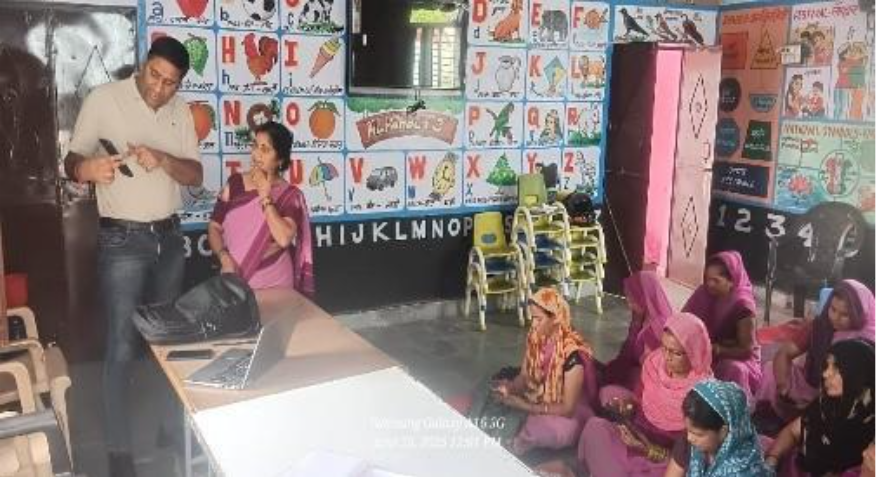
First, the group undertook a field visit to Rajasthan’s Dholpur district to conduct in-person interviews and discussions with focus groups. While there, stakeholder mapping identified key officials such as government representatives, data analysts and development partners and conducted in-person interviews with officials from across organizations and roles.
Next, the group co-designed a half-day workshop to validate the findings from the field, identifying data needs, challenges and expectations, while building a role-based analytical dashboard based on the existing Poshan Tracker, which the Government currently uses to track and monitor nutrition data.
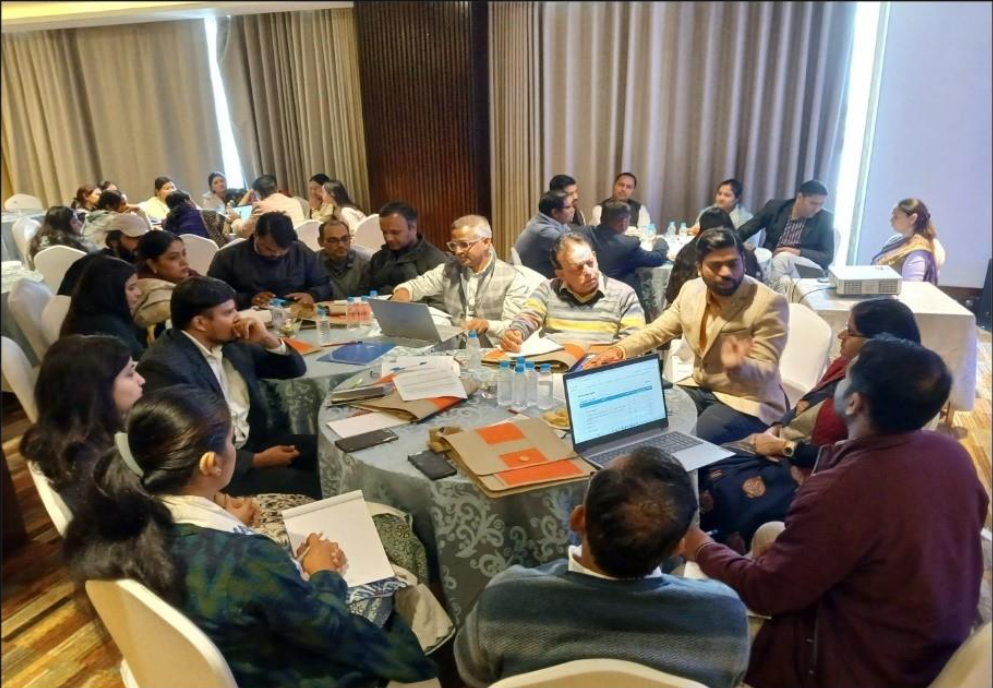
Workshop identifying data needs and priorities for the role-based dashboard.
Building a role-based analytical dashboard: From the needs assessment, Jhpiego and GIZ looked to enhance existing tools within Rajasthan state to strengthen and expand data capacities. The Poshan Tracker was implemented in 2021 and is a comprehensive system that has helped government officials monitor nutrition programmes and track and collect nutrition data in India. Despite improved data availability, suboptimal use of data for programme reviews and decision-making remains a key challenge. The new role-based dashboard addresses this by enabling decision makers to view trends, comparative analyses and performance rankings related to their positions, and to use data to make decisions to improve efficiency and capabilities in nutrition programming.
Building and customizing the dashboard was based on the outcomes of the needs assessment, where roles and divisions identified their specific data needs based on their priorities and responsibilities, for example:
State-level joint directors, who are tasked with monitoring and evaluation, require comparative performance data about their districts, and need statistics regarding the number and connectivity status of their Anganwadi centres (basic healthcare centres).
District level officialsrequire more granular data on performance gaps within their districts, such as the number of eligible beneficiaries provided with take-home rations or hot cooked meals, etc.
Sub-district administrators require precise statistics, such as the percentage of children measured.
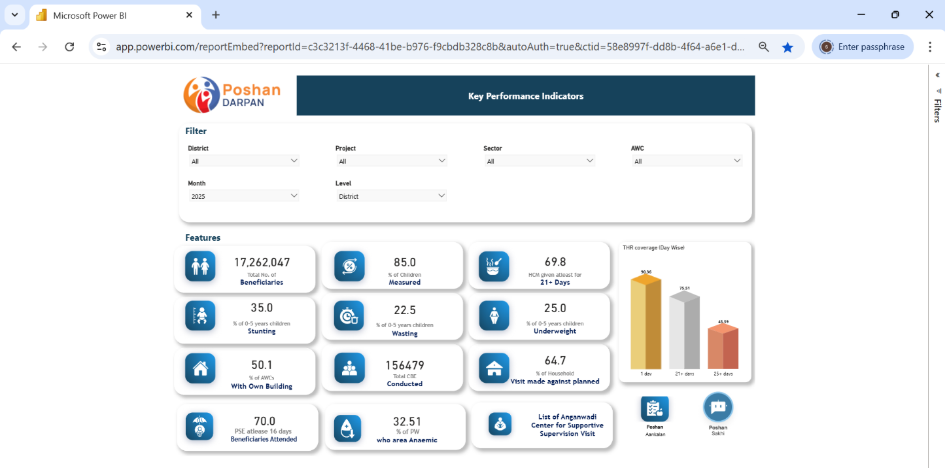
View of the role-based analytical dashboard.
Due to the sensitive nature of nutrition data, the team used dummy data based on existing formats and reports to guide the design of the dashboard. The output was a pilot dashboard with analysis tailored to specific user roles and decision makers' needs that can easily be integrated with existing data sets and scaled beyond the state of Rajasthan.
The dashboard enables users to:
visualize and filter data interactively,
track performance over time and view time-series graphs,
conduct in-depth sub-geographic analysis within KPIs,
identify top- and bottom-performing KPIs to support strategic planning,
support interdepartmental convergence of data systems between health and Integrated Child Development Services (ICDS) for integrated service delivery, and
access multi-indicator geographic and trend analysis through the Poshan tool.
Different roles, organizations and levels of government will be able to access and customize their data in an accessible format, leading to improved healthcare and nutrition throughout integrated areas.
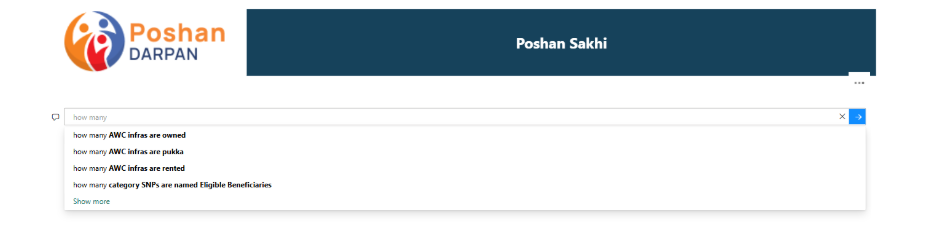
Additionally, artificial intelligence (AI) incorporated into the dashboard in the form of Poshan-Sakhi, an interactive data assistant, allows decision makers to pose specific questions based on the data. A comprehensive playbook was developed as a reference and training guide to empower users to leverage the dashboard for data-driven decision-making.
The AI-integrated Poshan-Sakhi tool allows users to ask questions and receive direct responses based on data.
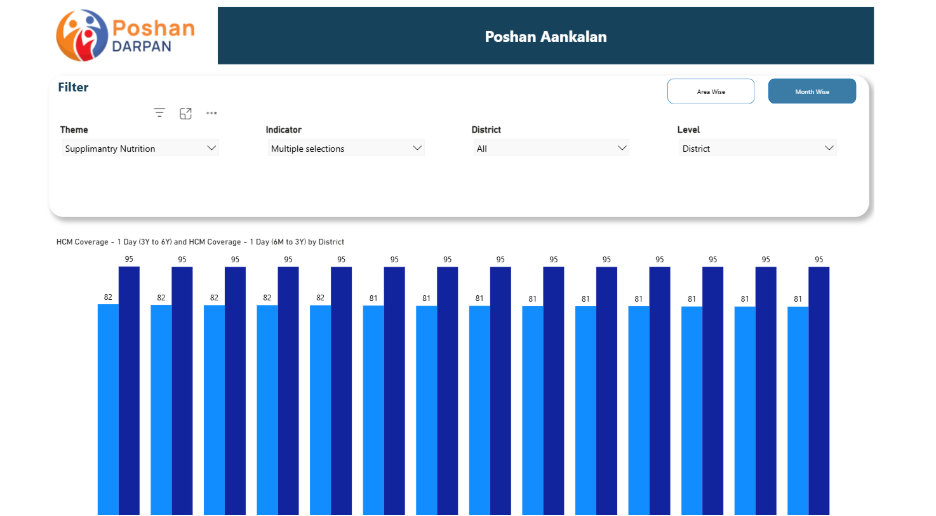
Results when searching for data using the Poshan Aankalan tool.
Training workshop on data collection tools.
How can better data contribute to better policy?
High-quality, up-to-date data can transform nutrition programming and inform decision making across government. This use case builds on existing data sets by expanding on a more comprehensive set of KPIs and allowing for better trend and comparative analysis in decision-making. It is now easier for state-level officials to identify service gaps and forecast trends to prioritize new infrastructure, counselling, and supplementary nutrition for hard-to-reach populations. The role-based analytical dashboard will expand the capacity of policymakers to access and use data. This will improve service delivery, supply chains and ensure equitable distribution of nutrition access and resources.
Next steps: Where do we go from here?
The priority is to scale the role-based analytical dashboard beyond Rajasthan to other states and incorporate the system nationally. It is imperative to organize data and capacity-building training for the new system so that officials at all levels of government can use and integrate the dashboard outputs into policymaking, creating a culture of data-driven decision-making.
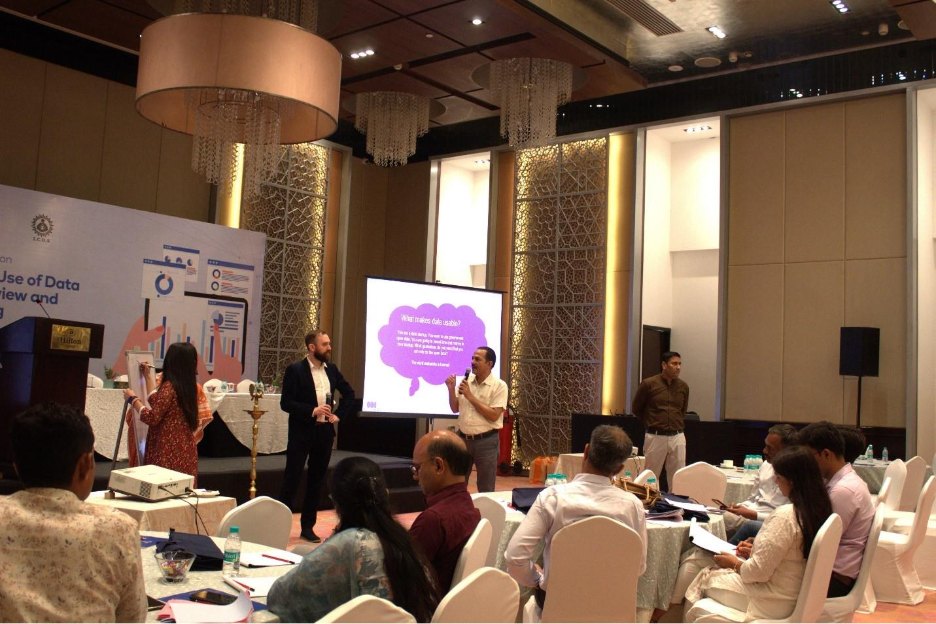
Opportunities for Rajasthan to scale up and foster a stronger data culture are being implemented, including an intensive capacity-building workshop facilitated in collaboration with the Open Data Institute (ODI) and attended by more than 60 officials including the Deputy Director of ICDS. This covered topics such as understanding the data lifecycle, data storytelling, and strategic planning with analytics. A national dissemination of the findings from the pilot was conducted with stakeholders from more than 10 states and 13 districts, enabling cross-state exchange of knowledge and innovation. Additional training will take place to hand over the dashboard to the state government and ensure relevant officials have the skills and knowledge to leverage the benefits of the dashboard before scaling to the national government.
The dashboard will also integrate nutrition data from multiple government systems that currently operate in silos. This will improve nutrition tracking and provide a more complete understanding of gaps and challenges, allowing policymakers to act more efficiently. Capacity-building and data systems integration will help Rajasthan scale and standardize nutrition tracking.
Presentation on the role-based analytical dashboard and data usage for nutrition programming.
Further resources
Advancing Digital Public Infrastructure for the Agriculture Sector